Novel Citizens' perceptions on Independence
What
else is there for a ‘bookshit’ locked down like the cheerer of the global and
national events such as Easter, Ramadan, soccer and our very own independence.
The novel citizens could not allow me to forget 18 April. A day strangely
recognised as the birthday of Zimbabwe. A day that makes it difficult to
imagine baby Zimbabwe in a free-way. What is the ‘bookshit’ saying by free-way?
Waaaaaal I sometimes feel a disconnection between the historical interpretation
of the facts of Zimbabwe in relation to the maintenance of the borders and
systems that sustains the parameters of the nation as country and state. This
is not why I am here to preach about. I am here to commit a crime by sharing
you the words by some literary citizens in the Zimbabwean literary texts I have
in my library as of today. I will put less analysis to the extracts.
WHOSE
LAND IS IT ANYWAY
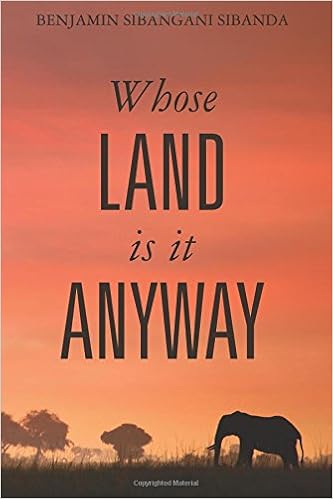
Below
is an excerpt of the conversation between him and a twenty-three year David.
‘Pastor
Jones,’ young David had said, ‘I keep hearing that ZIPA won the war and brought
independence to Zimbabwe.’
‘Well,
David.’ He had replied, ‘they did.’
‘But
why is that such a big deal?’
‘They
had to go to war to fight a recalcitrant, racist government that would not even
consider giving the indigenous people of this country the same rights as the
whites; would not even allow blacks the basic right to elect their own rulers.
It was a big deal.’
‘But
there were about six million of us against two hundred and fifty thousand
whites. We were bound to win. Why do they make such a big deal about a war that
was so heavily stacked in our favour? We couldn’t lose!’
Themba
a character whom I think for those who have read Chinodya’s classic Harvest of Thorns, will agree is an
extension of Cde Pasi nemaSellout ushers a perspective on expectations while
fighting during the Rhodesian days against the reality of the ‘post-Rhodesian
life’.
Speaking
to Pastor Jones, Themba says:
We
were excited because we thought that we were going on a short adventure; we
thought we would be back at school within a couple of days, but that for those
couple of days. There would be no teachers to tell us what to do. They told us
we were going on an important mission to liberate our country; that our parents
would be proud of us when we came back, and, of course that we could have any
girls we wanted when we did - which was
most exciting to our eighteen old minds. By the time we got to the base in
Mozambique, we had walked a long time and the excitement had worn off…’
He
continues;
You
know, they told us that those who stayed behind were sellouts and cowards who
were missing out on the opportunity to do something great for their nation;
that when our country was liberated, there would be no place for them. We hated
them almost as much as we hated the Rhodesian soldiers’
STONE
VIRGINS

Yvonne Vera’s Stone Virgins ushers me into perspectives of what this day means especially to the female characters in the book. I’m extracting jumbled extracts from the section entitled 1950-1980. Bearing in mind the fact that the day was paid with blood of its citizens Chapter Four of the book opens like this:
THE WOMEN WANT TO TAKE THE DAY into their own arms and embrace it, but how? To embrace the land and earth, the horizon, and triumph? To forget the hesitant moment, death, the years of deafness and struggle? The women want to take time of resignation, of throbbing fears, and declare this to a vanished day, but how? And take the memory of departed sons, and bury it. But how? To end the unsure sunsets, the solitary loveliness of the hills? Instead, nothing moves… they will not need to ask if independence is here, or if indeed, this is a new day p.45
‘Independence
is a respite from war, the mind may just rearrange itself to a comfortable
resolution, without haste, at the pace of each day unfolding and ending
naturally, and opening again like a flower p.51.
WHY DON’T YOU CARVE OTHER ANIMALS
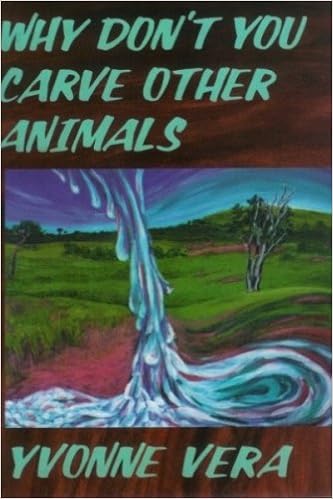 ‘Independence
Day’ a story in the short story anthology Why
Don’t You Carve Other Animals, by the legendary Zimbabwean poetic-prose
writer Yvonne Vera opened something that fascinated me. The midnight swap of
the Union Jack and the Zimbabwean One. The story presents the anxious crowds
waiting for the queen’s messenger to take home their symbolic cloth and the
replacement symbolically rise. Here is what the narrator precisely say on how
and when this happened as narrated on page 29:
The new Prime Minister gave a long speech, and people clapped and shouted. They raised their fists in jubilation. The new Prime Minister spoke into a microphone. The women continued dancing while the Prime Minister was speaking. The people waved their flags when they were told everything would be changing soon. Jobs and more money. Land and education. Wealth and food…
The
man watching the screen went to the kitchen for another beer. He was going to
celebrate Independence properly: with cold beer and a woman. Now it was ten
minutes to midnight. She must take off her clothes off. The Prince and the new
Prime Minister walked to the large flagpole in the middle of the stadium. The
old flag was flapping in the air, the new one was hanging below. The man pushed
the woman onto the floor. He was going into the new era in style and triumph.
She opened her legs. It was midnight, and the new flag went up. The magic time
of change. Green, yellow, white. Food wealth, reconciliation
HOUSE
OF STONE
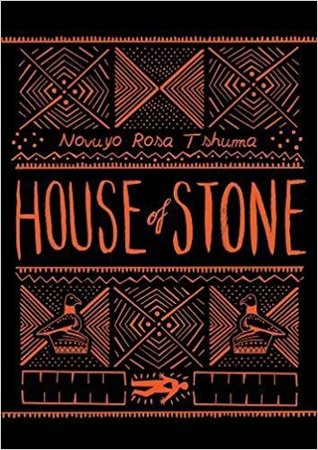
‘O
Thursday night giddy with swaying crowds and freedom curdled like sweetened
amasi and heady scents of flowers mingling in the heat! At around ten p.m., Bob
Marley clambered up the stage at Rufaro Stadium with the Wailers, and shouted
into the mic, ‘Viva Zimbabwe!’
The
crowd outside, high on the opium of independence, began to press against the
gates, trying to get in. those inside, propelled by this force, moved towards
the stage. Abednego felt Thandi’s moist hand slipping from his…
The police, overcome by fear, slipped into animated violence like a second skin; they began thwacking the people with their batons, the people wailed, so that their independence brimmed over into the night into a collective howl.
The police, overcome by fear, slipped into animated violence like a second skin; they began thwacking the people with their batons, the people wailed, so that their independence brimmed over into the night into a collective howl.
The
VIPs, penned in their elevated stand, were caught up in what was later
proclaimed as joyous weeping, overwhelming emotions at this monu-mentous day,
this emancipation of the black-and-brown peoples of the House of Stone… but, in
fact, the overzealous policemen, in a state of frenzy, had flung tear gas cans
whichever way, including at the cordoned-off stand, much to the Very Important
People’s chagrin. And at first, uncomprehending, the wailing people below
cupped their hands to receive the flying cans, welcoming yet another gift of
their independence- was this free Coca-Cola? - and then, when this independence
stung their eyes and threatened to make them blind, they cried even harder.”
p.129-131.
Complementing
Vera’s Independence Day’s narrator, Zamani tells us that
His
Excellency took his oath of office at around midnight, 18 April 1980” p.131.
Legacy
of independence: Personal view on the Citizens
Dancing,
fist (or open palm) raising, clapping and shouting people, speaking into the microphone,
dancing women, change talk shows, dreams of jobs and money, as well as land,
wealth and money are the legacy of the night.
The
flag and seemingly Zimbabwean big days or movements have interesting
connections. I am thinking of civic movements and obviously November 15. The
day I think the flag the new Prime Minister used symbolically ushered his
downfall.

There
is an interesting connection between Bob Marlye’s The Wailers and the
celebrants’ wailing
Betrayal
of those who thought they sacrificed their poor lives for the good cause
Even citizens from the novel world seem to forget about Banana.
I am inspired to study around this day by the citizens. I'm sure the next independence edition will have serious interrogation the citizens' claims.REFERENCES
Tshuma, N.R., 2019. House of Stone: A Novel. WW Norton & Company
Vera, Y., 2003. The Stone Virgins: A Novel. Macmillan
Vera, Y., 1992. Why don't you carve other animals. Tsar Publications.
Sibanda, B.S., 2017. Whose Land is it Anyway. African Publishing Group.
Comments
Post a Comment